
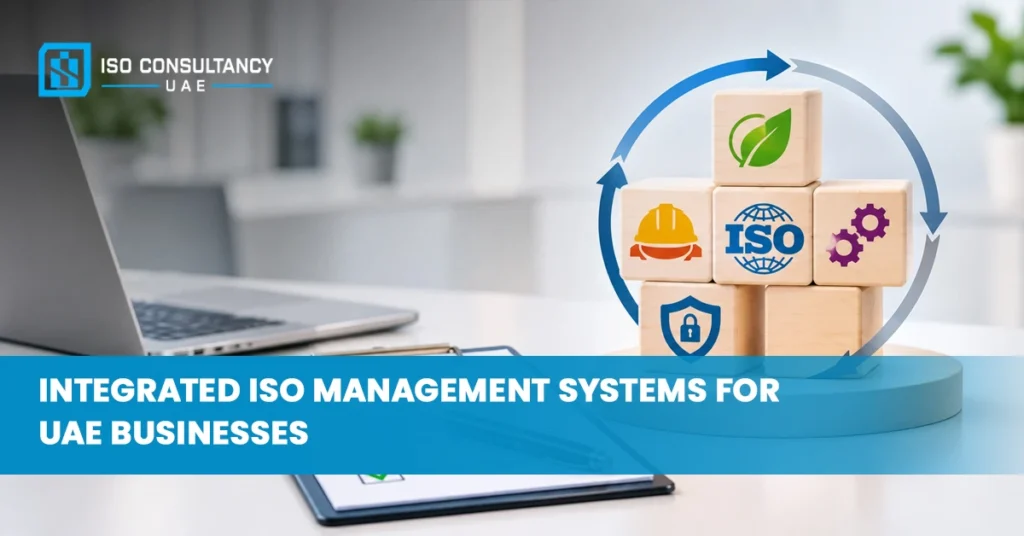
UAE companies that follow several ISO standards often manage separate policies, audits, risk registers, and reporting procedures. This can increase administrative work and make it harder for departments to maintain consistent records. An integrated management system brings compatible requirements together under one coordinated framework while preserving the specific controls each standard requires.
Integrated ISO management systems UAE helps businesses align quality, environmental, occupational health and safety, and information security processes within a shared management structure. Companies that maintain ISO management systems UAE can coordinate responsibilities, combine suitable audits, monitor performance, and manage common risks through connected procedures.
ISO Consultants UAE can help businesses assess their current systems, identify overlapping requirements, and plan an integration process that fits their operations and certification goals.
What Is an Integrated ISO Management System?
An integrated management system combines the shared requirements of two or more management standards into one coordinated framework. Instead of maintaining separate arrangements for every standard, a company can use common processes for leadership, risk management, document control, internal audits, corrective actions, and performance reviews.
For example, a UAE manufacturing company may use ISO 9001 for quality, ISO 14001 for environmental management, and ISO 45001 for occupational health and safety. The company can maintain one internal audit programme and a shared corrective action process while keeping the separate technical controls required by each standard.
Integrated Systems vs Separate Management Systems
Separate systems may require different audit schedules, forms, procedures, and reporting arrangements for related activities. An integrated system connects compatible processes and reduces unnecessary duplication.
| Separate Systems | Integrated System |
| Separate policies for overlapping requirements | One coordinated policy framework where appropriate |
| Different audit schedules for related processes | A combined audit programme with standard-specific checks |
| Multiple risk registers covering similar business risks | A shared risk process with standard-specific assessments |
| Separate management review meetings | One management review covering every applicable standard |
| Different corrective action records | A common process for tracking findings |
Integration does not mean removing requirements that apply to individual standards. The company must still demonstrate conformity with every standard included in its system.
Which ISO Standards Can UAE Companies Integrate?
Companies should select standards for their ISO management systems UAE according to their operations, customer expectations, legal obligations, and business risks. Several standards share management requirements, making them suitable for integration.
Common ISO Standard Combinations
ISO 9001 and ISO 14001
ISO 9001 addresses product and service quality, customer satisfaction, and process performance. ISO 14001 addresses environmental aspects, compliance obligations, and environmental performance. Companies can share document control, training, internal audits, and management reviews while maintaining separate quality and environmental controls.
ISO 9001 and ISO 45001
This combination suits manufacturers, construction firms, engineering companies, and businesses with workplace risks. Both standards address leadership, competence, risk-based planning, and performance monitoring. Companies must retain the specific hazard assessments and safety controls required by ISO 45001.
ISO 14001 and ISO 45001
Industrial sites, warehouses, and construction companies can coordinate site inspections, operational controls, emergency planning, and employee awareness. Environmental incidents and workplace injuries still require appropriate separate reporting and investigation.
ISO/IEC 27001 with Other Standards
Companies can share document control, staff awareness, management reviews, and corrective action processes. They must retain information security risk assessments, risk treatment arrangements, applicable security controls, and the Statement of Applicability.
How to Integrate ISO Management Systems in the UAE
Successful integration starts with an accurate review of existing ISO management systems UAE. Management should identify shared processes, retain standard-specific requirements, and assign responsibility for every part of the combined framework.
Review Existing Systems and Identify Gaps
List every ISO standard the company follows or plans to adopt. Record the applicable editions, certification scopes, covered locations, audit dates, and outstanding findings.
Compare existing procedures with the requirements of each standard. Identify duplicate documents, conflicting instructions, missing controls, and processes that already work across departments.
ISO Consultants UAE can help companies review their current management systems and identify the work required before integration. The review should produce a clear list of gaps, priorities, responsibilities, and proposed actions.
Build a Shared Framework and Align Risk Assessments
Create a common framework for leadership responsibilities, document control, employee competence, internal audits, corrective actions, and management reviews. Assign owners to shared processes and identify the records each owner must maintain.
The company should also coordinate its risk assessment process. A common method can help departments identify risks, evaluate their impact, assign actions, and monitor changes. However, quality risks, environmental aspects, workplace hazards, and information security risks still require the appropriate standard-specific assessments.
UAE companies should record the legal and regulatory obligations that apply to their activities and locations. These may include workplace safety, environmental protection, data protection, and industry-specific requirements.
Update Procedures, Train Employees, and Test the System
Review existing procedures to remove conflicting instructions and unnecessary duplication. Explain changes to employees before introducing the revised system. Staff should understand their responsibilities, the records they must maintain, and the steps they should take when problems arise.
Before certification audits, conduct internal audits against every included standard. A combined audit can examine shared processes once and assess the additional controls required by each standard.
Record findings against the correct requirements and assign corrective actions to responsible employees. Review the evidence before closing each action and check that the changes address the underlying problem.
What Documents Should an Integrated ISO System Include?
ISO management systems UAE need clear documents and records that show how the company manages shared processes and standard-specific requirements. The company should map each document to the standards it supports so employees and auditors can locate the right evidence.
Common documents and records may include:
- Integrated management system scope and policies.
- Management objectives and performance indicators.
- Document control procedures and revision records.
- Risk assessments and compliance obligation records.
- Employee training and competence records.
- Internal audit schedules and reports.
- Management review records.
- Corrective action procedures and action registers.
Some records must remain specific to individual standards. Examples include environmental aspect assessments, workplace hazard assessments, quality inspection results, and the Statement of Applicability for ISO/IEC 27001.
A shared document structure should make records easier to manage, not weaken the evidence required for any standard. Companies should keep records current and confirm that documented procedures reflect actual business activities.
What Are the Main Benefits of Integrated ISO Management Systems?
Integrated ISO management systems UAE can help companies manage several standards without maintaining entirely separate systems. The results depend on the company’s existing processes, management commitment, and quality of implementation.
Reduced Administrative Work
A shared document control process, training system, audit schedule, and corrective action register can reduce repeated administrative tasks. Employees can follow common procedures for related activities instead of working with multiple versions of similar instructions.
Companies can compare the time spent on audits, document updates, and reporting before and after integration to measure actual savings.
Better Coordination and Performance Reporting
A combined system gives management a shared view of quality, environmental, safety, and information security performance. Department heads can coordinate actions when one business decision affects several areas.
For example, changing a supplier may affect product quality, environmental performance, workplace safety, and information security. A coordinated review helps the company identify relevant risks before approving the change.
Management can also review shared objectives, audit findings, corrective actions, and resource needs through one coordinated meeting. Separate sections should cover the performance indicators and decisions required by each standard.
ISO Consultants UAE can help businesses assess how an integrated framework could fit their current operations and reporting arrangements.
What Challenges Can Affect ISO System Integration?
Integrated ISO management systems UAE projects can create problems if the company combines documents without checking the requirements of each standard. Management should address these risks during planning and implementation.
Common challenges include:
- Conflicting procedures: Different departments may follow inconsistent instructions. Review these differences and assign clear process owners.
- Missing technical controls: General procedures may not cover every standard-specific requirement. Use a requirements matrix to identify missing controls and records.
- Limited employee awareness: Staff may continue using old forms or procedures. Explain changes, remove obsolete documents from routine use, and check employee understanding.
- Weak management support: Integration requires staff time, training, process reviews, and regular monitoring. Senior management should approve the project scope and assign resources.
A clear implementation plan helps the company manage these problems before they affect its audit readiness.
How Much Does ISO Management System Integration Cost in the UAE?
The cost of integrated ISO management systems UAE projects depends on the number of standards, company size, number of locations, current documentation, certification status, and work required to close gaps.
| Cost Factor | Estimated Cost in AED |
| Initial gap assessment | AED 2,000 to AED 6,000 |
| Integration consultancy | AED 5,000 to AED 20,000 |
| Staff training and awareness | AED 1,000 to AED 5,000 |
| Internal audit support | AED 2,000 to AED 7,000 |
| External certification audits | Quoted separately |
Estimated costs only. Actual fees vary by provider, audit scope, industry, number of sites, and required preparation.
A company with established management systems may need only a gap review, document alignment, and combined audit planning. A company starting from scratch may need new procedures, employee training, operational controls, and performance records.
Ask providers to separate consultancy, training, internal audit, and external certification fees in their quotations. This makes it easier to compare the proposed work and plan the budget.
How Do Integrated ISO Certification Audits Work?
Companies that integrate several standards can often coordinate certification audits through a certification body with the appropriate scope and auditor competence. The certification body determines the audit arrangements according to the applicable standards and its procedures.
Before the audit, prepare a requirements matrix that links each standard to its procedures, records, process owners, and supporting evidence. Discuss the proposed audit schedule with the certification body and confirm which locations and activities fall within the audit scope.
During the audit, the team may examine shared processes once and then check additional requirements for each standard. If auditors raise findings, the company should record each finding against the relevant requirement, investigate its cause, assign corrective actions, and provide evidence within the required deadlines.
An integrated audit does not automatically mean that every standard receives certification. The company must meet the requirements for each standard included in its certification scope.
How to Choose an ISO Integration Consultant in the UAE
Choosing a consultant depends on the company’s standards, industry, current management systems, and certification goals. Look for practical experience with integrated systems rather than support limited to document preparation.
Before hiring a consultant, ask:
- Which ISO standards have you integrated for businesses in our industry?
- Will you assess our current procedures and operational controls?
- How will you identify shared and standard specific requirements?
- Will you support staff training, internal audits, and corrective actions?
- What documents and reports will we receive?
- Are certification body fees separate from consultancy fees?
Integrated ISO management systems UAE projects benefit from a clear scope, realistic deadlines, and written responsibilities. A suitable consultancy engagement may include a gap assessment, requirements matrix, shared procedure planning, staff awareness sessions, internal audit support, and a review of outstanding findings.
ISO Consultants UAE can discuss the company’s current arrangements and help identify the preparation work needed for integration. The consultant should explain the proposed work and fees without promising a guaranteed certification result.
Conclusion
An integrated management framework helps UAE companies coordinate quality, environmental, safety, and information security processes through shared procedures and audit planning. Businesses should begin with a gap assessment, map the requirements of each standard, and train employees before testing the combined system. Integrated ISO management systems UAE can help companies reduce duplicated work while maintaining the controls each standard requires. ISO Consultants UAE can assist businesses with reviewing their current systems and planning the steps towards integration.
FAQs
What Is the Main Purpose of an Integrated ISO Management System?
An integrated system combines shared management processes across two or more ISO standards while retaining the specific controls, records, and performance requirements of each standard.
Which ISO Standards Can a UAE Company Integrate?
Companies commonly integrate ISO 9001, ISO 14001, and ISO 45001. They can also include ISO/IEC 27001 or other relevant standards when their business requirements support integration.
Can a Small Business Integrate Multiple ISO Standards?
Yes. A small business can use shared procedures, records, and audit arrangements if the system covers every applicable requirement. The company should consider its staff, budget, risks, and certification goals before choosing standards.
Does an Integrated Management System Reduce Audit Costs?
It may reduce repeated audit activities and administrative work. Actual savings depend on the certification body’s audit plan, number of standards, company size, sites, and complexity of operations.
How Long Does ISO Management System Integration Take?
The timeline depends on the company’s current systems, number of standards, operational complexity, and outstanding gaps. Companies with established systems may complete integration faster than those building new processes.
Can One Certificate Cover Multiple ISO Standards?
A certification body may issue certificates for multiple standards or use a combined certification arrangement. The certificate and its scope must identify the applicable standards and covered activities.