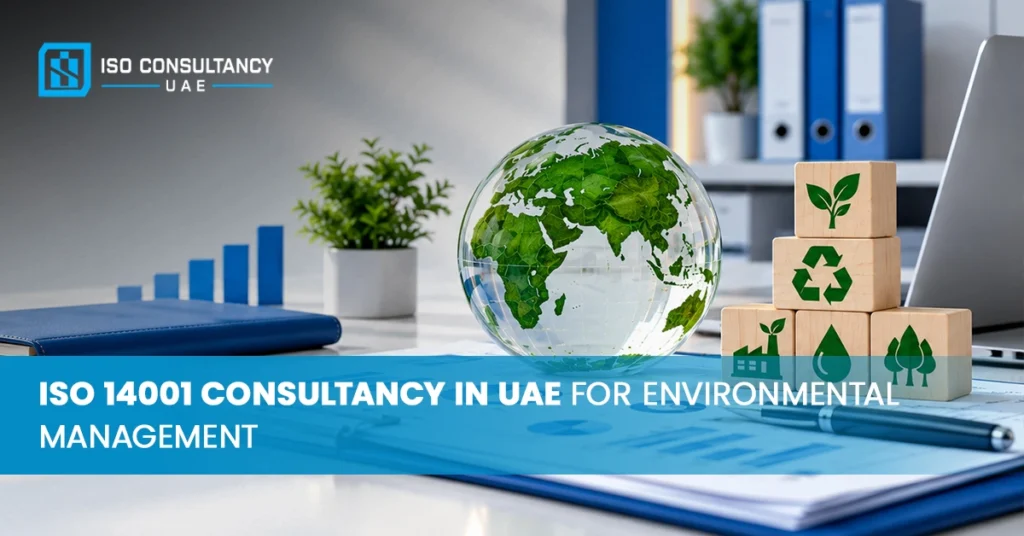
UAE businesses face environmental responsibilities related to waste disposal, air emissions, water use, chemical storage, and pollution control. A well-managed environmental management system helps companies identify these risks, meet applicable legal duties, and improve daily operations.
ISO 14001 consultancy UAE support helps businesses assess their current practices, prepare documentation, train employees, and get ready for an independent certification audit.
ISO Consultants UAE helps organisations understand the requirements and plan their implementation work according to their operations. Companies in construction, manufacturing, logistics, and facilities management can use ISO 14001 to set environmental targets, monitor performance, and manage environmental risks.
Companies pursuing ISO 14001 certification UAE should start by understanding the standard, identifying local compliance obligations, and assigning clear responsibilities across the business.
What Does ISO 14001 Cover in Environmental Management?
ISO 14001 sets requirements for an environmental management system (EMS). It gives businesses a structured way to identify environmental impacts, manage risks, meet compliance obligations, and improve environmental performance.
The standard applies to organisations of different sizes and across different industries. Each business defines its EMS scope according to its activities, locations, products, and services.
Environmental Aspects and Their Impacts
An environmental aspect refers to an activity that can affect the environment. An environmental impact describes the resulting change.
Examples include:
- Fuel consumption that contributes to greenhouse gas emissions.
- Industrial wastewater that can affect water quality.
- Construction waste that increases landfill use.
- Chemical spills that can contaminate soil.
- Excessive energy and water consumption that depletes resources.
Businesses assess these aspects to identify which ones require stronger controls.
Environmental Objectives and Performance Monitoring
An EMS also requires clear environmental objectives. A company might aim to reduce electricity consumption, improve waste segregation, lower fuel use, or prevent chemical spills.
Managers assign responsibilities, monitor performance, review results, and take corrective action when results fall short of targets. This process helps companies track progress through records and measurable indicators rather than relying on general environmental promises.
Which UAE Industries Benefit From ISO 14001?
Different industries face different environmental risks. Businesses should identify the risks that arise from their actual activities and set controls that match their operations.
Construction and Infrastructure Companies
Construction firms manage dust, noise, fuel consumption, demolition waste, and risks from paint, cement, and other materials. An EMS helps project managers assign waste handling duties, monitor site conditions, control spills, and keep records of waste transfers.
Manufacturing and Industrial Facilities
Factories may generate wastewater, air emissions, chemical waste, and hazardous by-products. They need suitable storage areas, equipment maintenance schedules, spill response procedures, and monitoring records. ISO 14001 also helps management assess how production changes affect environmental performance.
Logistics, Warehousing, and Facilities Management
Logistics companies can monitor vehicle fuel use, delivery routes, equipment emissions, and packaging waste. Warehouses can improve waste segregation and chemical storage. Facilities management teams can track electricity consumption, water use, cleaning products, and waste collection.
Offices and Professional Service Firms
Office-based companies may have fewer environmental risks, but they still consume electricity, use paper, generate electronic waste, and purchase supplies. An EMS helps them set practical targets and manage these activities through purchasing policies, recycling arrangements, and resource monitoring.
What UAE Environmental Laws and Permits Should Your EMS Address?
Businesses must identify the environmental laws and permits that apply to their activities. ISO 14001 provides a management framework for tracking these obligations, but it does not replace government requirements.
Federal Environmental Requirements
Federal Law No. 24 of 1999 concerning the Protection and Development of the Environment established a federal framework for environmental protection. Businesses should review the current legislation and related regulations that apply to their activities. They can check the official UAE legislation platform for current laws and amendments.
The compliance register should record relevant legal duties, permit conditions, reporting deadlines, responsible employees, and evidence of compliance.
Environmental Requirements in Dubai and Abu Dhabi
Companies must also check the requirements of the relevant emirate and competent authority.
Dubai Municipality publishes environmental sustainability guidelines and provides environmental clearance services for certain industrial, development, and infrastructure projects. Dubai also has specific waste management legislation that affects applicable waste producers and activities.
In Abu Dhabi, companies should identify the environmental permits and conditions that apply to their activities through the relevant authorities, including the Environment Agency Abu Dhabi where applicable.
Requirements can differ by location, activity, and project type. A company should confirm its obligations before preparing its compliance register.
Does ISO 14001 Replace Environmental Permits?
No. ISO 14001 certification does not grant permission to conduct regulated activities. A company may still need environmental clearances, waste permits, discharge approvals, or other authorisations.
An EMS helps the company track these requirements, assign responsibilities, monitor compliance, and retain supporting records. ISO Consultants UAE can help businesses organise this work around their operating activities and applicable obligations.
What Does an ISO 14001 Consultant Do for a UAE Company?
An ISO 14001 consultancy UAE provider helps a business build an environmental management system that reflects its actual operations. The consultant reviews existing practices, identifies gaps, and helps employees establish the processes and records required by the standard.
Typical consultancy activities include:
- Initial assessment: Review existing environmental procedures, records, site conditions, and management practices.
- Environmental risk assessment: Identify significant environmental aspects and assess their potential impacts.
- Legal compliance register: Document applicable legislation, permit conditions, and monitoring duties.
- EMS documentation: Prepare or review environmental policies, objectives, procedures, registers, and operational records.
- Employee training: Explain environmental responsibilities, emergency procedures, waste controls, and reporting arrangements.
- Internal audit preparation: Check records and procedures, identify gaps, and help the company address findings.
- Certification preparation: Help the business prepare for an independent external audit.
The consultant supports implementation, but an independent certification body assesses the EMS and decides whether the organisation meets the applicable requirements. Companies should confirm that their chosen certification body holds suitable accreditation for the relevant scope.
How to Implement ISO 14001 in the UAE: Seven Steps
The implementation process should follow a planned sequence. Each stage produces information or records that support the next stage.
Step 1: Define the Certification Scope
Identify the sites, departments, processes, and activities that the EMS will cover. A company with several warehouses or factories should define the scope carefully and account for the environmental risks at each included location.
Step 2: Complete an Environmental Gap Assessment
Compare current practices with the requirements of ISO 14001:2026. Review existing policies, permits, waste records, energy data, staff responsibilities, and monitoring procedures. Record missing requirements and assign actions to the relevant managers.
Step 3: Assess Environmental Risks and Legal Duties
Identify activities that can affect the environment and evaluate their significance. Review normal operations, unusual operating conditions, emergencies, and relevant life cycle considerations.
Prepare a compliance register that identifies applicable laws, permits, reporting duties, and deadlines. Assign an employee to monitor each obligation.
Step 4: Prepare the EMS Documentation
Develop the environmental policy, aspects and impacts register, environmental objectives, compliance register, operational controls, and required records.
The company should document processes that employees need to follow. It should avoid creating paperwork that does not support environmental control or the requirements of the standard.
Step 5: Train Employees and Apply Environmental Controls
Explain each employee’s responsibilities and show staff how to follow the relevant procedures. Training may cover waste segregation, chemical storage, spill response, equipment inspections, and environmental incident reporting.
Managers should apply these procedures during normal work rather than introducing them only before the certification audit.
Step 6: Conduct an Internal Audit and Management Review
An internal audit checks whether the EMS meets the standard’s requirements and the company’s own procedures. Auditors examine records, observe activities, interview employees, and document findings.
Management then reviews audit results, environmental performance, compliance status, objectives, and resource needs. The company should assign corrective actions and track them until completion.
Step 7: Complete the External Certification Audit
The certification body reviews the EMS and evaluates its implementation. The audit process may include document review, site inspections, employee interviews, and checks of operational records.
If auditors identify nonconformities, the company must address them according to the certification body’s procedures. The certification body makes the final certification decision after it evaluates the required evidence.
How Much Does ISO 14001 Consultancy Cost in the UAE?
The cost of ISO 14001 consultancy UAE depends on the company’s size, number of sites, industry, environmental risks, and current management practices. A business with established procedures may need less preparation than a factory that must create new environmental controls and records.
| Cost factor | Effect on the estimated fee |
| Company size | Larger workforces may need more training and coordination. |
| Number of sites | Multiple locations increase assessment and implementation work. |
| Industry risks | Complex environmental activities require more detailed controls. |
| Existing documentation | Missing procedures and records can increase preparation time. |
| Certification audit | The certification body’s fees usually sit outside the consultancy fee. |
All costs depend on the project scope. Request a written quotation for your business.
Before accepting a quotation, check which activities it covers. Ask for a breakdown of assessment, documentation, training, internal audit support, travel, and external certification fees. Confirm the charges for extra locations or follow-up visits.
How Long Does ISO 14001 Certification UAE Take?
The timeline depends on the company’s operations, current procedures, site count, and readiness for an audit. A small office may need less preparation than a manufacturing facility with several production lines and complex environmental risks.
The project normally includes an initial assessment, documentation, employee training, implementation, internal audit, management review, and external certification audit.
Companies can reduce avoidable delays by assigning a project owner, making records available, completing staff training, and addressing audit findings promptly. The consultant and certification body should agree on realistic milestones based on the business’s actual readiness.
How to Choose an ISO 14001 Consultancy UAE Provider
A suitable consultant should understand both the ISO standard and the environmental risks that arise from your industry. Compare providers using the following criteria:
- Industry experience: Ask about previous projects in construction, manufacturing, logistics, or your specific sector.
- UAE regulatory knowledge: Confirm that the consultant can help identify applicable federal and emirate-level requirements.
- Clear deliverables: Request a written list of documents, training sessions, assessments, and audit support.
- Project planning: Check the proposed schedule, employee responsibilities, and reporting arrangements.
- Transparent pricing: Review the consultancy fee separately from certification and other project expenses.
- Certification arrangements: Confirm that an independent certification body will conduct the external audit.
ISO Consultants UAE can help businesses assess their current systems, identify gaps, and plan the work needed for certification readiness. Before signing an agreement, ask for the project scope, expected deliverables, payment terms, and any exclusions in writing.
What Changes Under ISO 14001:2026?
ISO published the ISO 14001:2026 edition on 15 April 2026. It replaces the 2015 edition and retains the standard’s focus on environmental management and continual improvement.
Organisations certified to the previous edition should review the updated requirements and contact their certification body about the applicable transition arrangements.
What Existing Certificate Holders Should Do
- Review the updated standard against the current EMS.
- Identify gaps in procedures, records, and environmental controls.
- Update relevant documents and employee training.
- Review environmental risks, objectives, and compliance arrangements.
- Schedule internal checks and discuss transition audit requirements with the certification body.
Companies planning their first ISO 14001 certification project should use the 2026 edition as the basis for implementation. Businesses with an existing certificate should confirm their transition deadline directly with their certification body, as transition arrangements may depend on current certification rules.
Which ISO 14001 Implementation Mistakes Should UAE Companies Avoid?
Poor preparation can create audit findings and weaken the EMS after certification. Businesses should watch for these common problems.
- Copying generic procedures: Write procedures that reflect actual site activities, equipment, and environmental risks.
- Ignoring legal changes: Review applicable legislation and permit conditions regularly.
- Setting unclear targets: Use measurable objectives, assigned responsibilities, and defined review dates.
- Keeping incomplete records: Maintain evidence of inspections, training, waste transfers, monitoring, and corrective actions.
- Ignoring employee involvement: Train staff to apply procedures during daily operations.
- Rushing internal audits: Allow enough time to check evidence, report findings, and correct problems.
- Confusing certification with legal approval: Maintain all permits and approvals that apply to the business.
A working EMS should help employees control environmental risks every day. Companies should review their results regularly and update procedures when activities, equipment, legal duties, or site conditions change.
Build an Environmental Management System That Works for Your Business
ISO 14001 helps UAE businesses manage environmental risks, monitor resource use, maintain relevant records, and improve their operating practices. Successful implementation requires more than documentation. Companies need clear responsibilities, suitable controls, employee participation, and regular performance reviews.
The ISO 14001 consultancy UAE process should reflect your industry, current procedures, site conditions, and applicable legal duties. ISO Consultants UAE can help your business assess its readiness, plan implementation activities, and prepare for an independent certification audit.
Ready to Discuss Your ISO 14001 Requirements?
Contact ISO Consultants UAE to discuss your company’s environmental management needs, certification goals, and implementation timeline. Request a consultation to review your current position and identify the next steps towards ISO 14001 certification UAE.
Phone: +971 543383 206
Email: info@isoconsultancyuae.com
FAQs
Is ISO 14001 Certification Mandatory in the UAE?
ISO 14001 certification does not apply as a universal legal requirement to every UAE business. A client, tender, contract, or industry requirement may call for certification. Companies must still meet the environmental laws and permit conditions that apply to their activities.
Can Small Businesses Get ISO 14001 Certified?
Yes. Small businesses can implement an EMS and apply for certification. The scope, documentation, training, and controls should reflect their activities, environmental risks, and number of locations.
Who Issues the ISO 14001 Certificate?
An independent certification body assesses the environmental management system and decides whether the company meets the standard. A consultant helps prepare the system but does not issue the certificate unless it separately holds the appropriate certification role and independence requirements permit it.
How Long Does an ISO 14001 Certificate Remain Valid?
Certification generally follows a three-year cycle, with surveillance audits during that period and a recertification audit before the cycle ends. The company must meet the certification body’s requirements to maintain its certificate.
Can Companies Combine ISO 14001 With ISO 9001 or ISO 45001?
Yes. Companies can coordinate their environmental, quality, and occupational health and safety management systems. They can share suitable processes, such as document control, internal audits, corrective actions, and management reviews, while meeting each standard’s individual requirements.